Chinese Currency - Tips on Using Money in China
The Chinese currency confuses a lot of first-time visitors, is it renminbi, yuan, CNY or kuai? Here is what the names mean and how to actually handle money on the ground in China.
 Selina Chen 陈丽明 EN ⇄ 中文 · Chinese culture
 The renminbi is the official currency of the People’s Republic of China. The yuan is the basic unit of renminbi; however, it is also referred to as the Chinese currency most of the time, particularly in international contexts where “Chinese yuan” is used to refer to the renminbi. The difference is that renminbi is the name of the currency and yuan refers to its primary unit. One yuan is divided into ten jiao, and a jiao is divided into ten fen. The renminbi is issued by the People’s Bank of China, the country’s financial authority.
What is the Chinese currency called?
Tourists in China are usually confused about how to refer to the Chinese currency. In English, some people call it the “Chinese dollar.” There are three common names and two regular symbols used for currency in China. The official name is renminbi, which translates to “people’s currency” and is abbreviated to RMB. The most widely used international name is yuan, abbreviated to CNY. You can write either CNY 1000 or RMB 1000, both are correct. The official sign representing the Chinese yuan is ¥. However, in most restaurants and stores in China, the symbol is shown as the Chinese character 元 instead, which is pronounced yuan. While travelling in China you may also hear people say “kuai” (pronounced kwai), which is a colloquial word for yuan. The Chinese yuan or RMB is used only in mainland China. Hong Kong’s currency is the Hong Kong dollar, and Macau’s currency is the pataca.
Chinese Banknotes
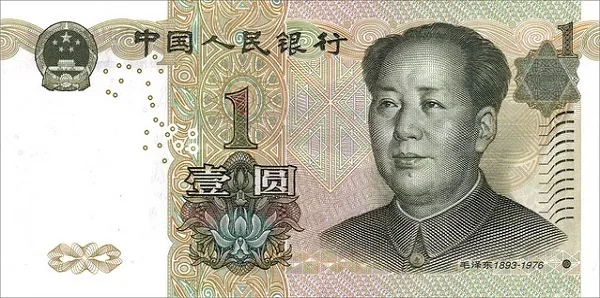
Chinese banknotes are issued in denominations of 100, 50, 20, 10, 5 and 1 RMB.
Chinese Coins
Coins are issued as 1¥, 0.5¥ and 0.1¥.
What is the difference between RMB and yuan?
There is no real distinction between the RMB and the yuan. The RMB is the official currency of the People’s Republic of China and translates to “people’s money.” Its international symbol is CNY (or CNH in Hong Kong; abbreviated as RMB with the symbol ¥). The yuan is the name of the unit in which renminbi transactions are denominated; however, it is also commonly referred to as the Chinese currency. This is the same as pound sterling (the name of the British currency), where the price of a commodity in a London store would simply be stated in pounds.
What does RMB stand for?
RMB is an abbreviation for the official Chinese currency. It stands for Ren Min Bi, which translated to English means “people’s money” or “people’s notes.” Yuan is the base unit of RMB, similar to a dollar in USD.
Which is the best place to buy Chinese yuan?
You can exchange currency at the airport, most major banks (Bank of China is the usual choice), and larger hotels. Airport counters give the worst rates, so change only what you need to reach the city and do the rest at a bank. ATMs at major Chinese banks also dispense RMB against foreign cards, with an English menu option; expect a per-withdrawal fee of roughly 20 to 30 yuan plus your own bank’s charge, and check foreign-withdrawal eligibility before you travel. Traveller’s cheques are effectively dead here: a few bank branches still redeem them, no ordinary merchant takes one. Sort out cash and cards in a major city before heading to rural areas, where a working ATM is far less certain.
Role of the renminbi in the international market
In terms of size and dynamism, the economy of the People’s Republic of China stands out among the world’s rising markets. It has become the world’s second-largest economy and is one of the most important contributors to international growth. These developments have led to intense speculation that the renminbi could become one of the key international currencies.
Exchange rate of the Chinese currency
The Chinese currency is not freely convertible, which means the RMB exchange rate is heavily affected by government policy and is difficult to predict. The Chinese government prefers to avoid huge fluctuations in the renminbi’s exchange rate and intervenes from time to time to prevent this. For those planning to visit China, if you suspect a future rise or fall in the exchange rate between your home currency and the RMB, booking early can be a way to reduce the chance of exchange loss.
How people actually pay in China
China runs on mobile payment, and since 2023 that world is open to visitors. Download Alipay or WeChat Pay, verify your passport in the app, and link an international Visa or Mastercard, with no Chinese bank account or local SIM needed. From then on you pay the way locals do, scanning a QR code, and it works almost everywhere in the cities: restaurants, shops, taxis, ticket counters. Small payments carry no extra platform fee; larger ones add a service fee plus your card’s own foreign-transaction charge, and verified foreign cards have per-transaction and annual limits.
Cash is now the backup, not the plan. Keep a modest amount of RMB for what mobile payment does not reach: rural shops, family-run stalls, the occasional domestic-only QR code. Merchants are legally required to accept it. Tipping is not expected in mainland China, and a credit card is worth carrying for hotels and airlines, though do not count on swiping it at street level. Set the apps up before you travel to China.
Your dates. My quote.
Twelve hours.
Send your cities, dates and product list. You'll get a fixed written quote, no obligation, no deposit to ask.
superinterpreter · selina@mychinainterpreter.com · Xiamen, China · UTC+8