What Credit Cards Are Accepted in China?
Your Visa works in China. It just almost never works by handing it to a cashier. Here is where a foreign card is genuinely accepted in 2026, what the mobile wallets charge to run it, and what to carry as backup.
 Selina Chen 陈丽明 EN ⇄ 中文 · Travel guide
 What credit cards are accepted in China in 2026
Visa, Mastercard, American Express, Discover, JCB and Diners Club are all accepted in China. The catch is how. Since 2023 the practical answer for a visitor is not swiping a card at all, it is linking that card to Alipay or WeChat Pay and paying by QR code like everyone around you. Both wallets take all seven major networks, UnionPay included, and no Chinese bank account is required.
Handing the physical card to a cashier is the exception, not the rule. In Chengdu, Beijing, Tianjin or Shanghai you will find plenty of counters that take it, but they are a specific kind of counter: international hotels, airports, high-end department stores, international retail chains. The noodle shop on the corner is not one of them, and neither is the taxi.
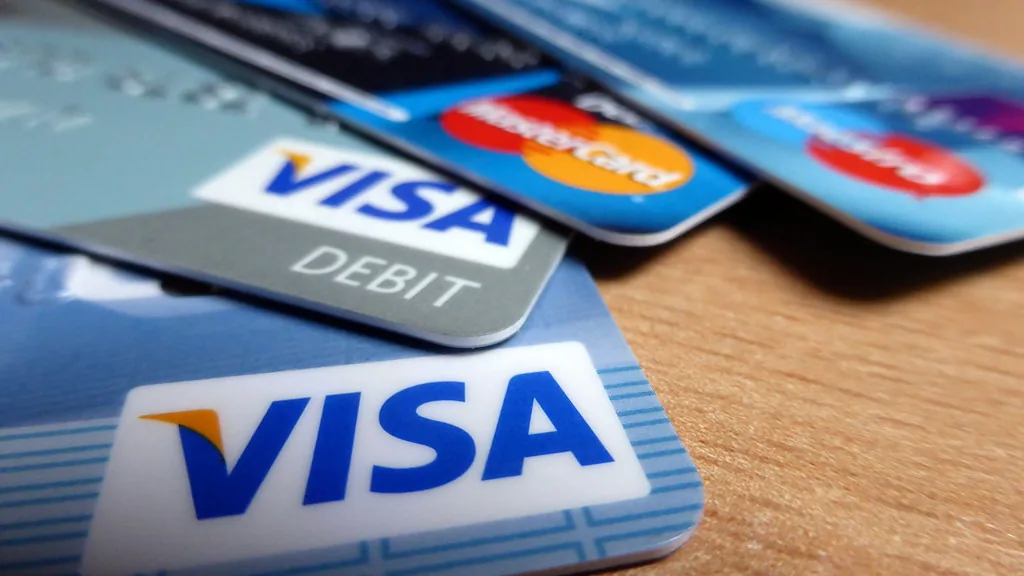
Why your card gets refused, and what UnionPay has to do with it
China UnionPay is the domestic card network. Almost every POS terminal in the country runs on UnionPay rails, and a Visa or Mastercard issued abroad does not route over those rails. That is the whole explanation. The terminal is not broken and the cashier is not being difficult; the card simply has nowhere to go.
Merchants who accept foreign cards have deliberately added international acquiring on top, which costs them money and is worth it only where foreign customers are common. That is why acceptance maps so neatly onto hotels, airports and luxury retail.
The licensing picture has moved, though not in a way that helps you at the counter. American Express became the first foreign network licensed to clear renminbi in the mainland when its joint venture, Express (Hangzhou) Technology Services, won final approval in 2020. Mastercard’s joint venture with NetsUnion, Mastercard NUCC, was licensed by the People’s Bank of China in November 2023. Both licenses cover cards issued inside China. They do nothing for the card in your wallet from Ohio.
Link your Visa or Mastercard to Alipay and WeChat Pay
This is the part the old advice missed, and it is now the whole game. Download Alipay or WeChat before you fly, because both app stores and the verification flow are easier to deal with on your home network.
You will need your passport, the card itself, and a phone number that receives SMS. Add the card in the wallet’s payment settings, then complete identity verification by photographing your passport. Do the verification. Skipping it leaves you on a much lower spending cap that a single hotel bill will blow through.
Once verified, the limits are generous. In March 2024 the People’s Bank of China directed the platforms to raise the single-transaction ceiling for foreign nationals from USD 1,000 to USD 5,000, and the annual cumulative limit from USD 10,000 to USD 50,000. Ant Group implemented it for Alipay and WeChat Pay matched it. Those are still the standing limits.
Install both if you have the patience. They are not interchangeable in practice: some merchants display only one QR code, and WeChat Pay is welded into the messaging app that runs Chinese social life, while Alipay carries more of the travel booking and transport ticketing.
What paying by wallet actually costs
Three separate charges can stack on one purchase, so it is worth knowing which is which.
The wallet’s service fee is the first. Payments of CNY 200 or less are free. Above CNY 200, the wallet takes 3% of the transaction. That threshold is per transaction, not a daily total, which means street food, metro fares, taxis and convenience stores usually cost you nothing, while hotels, train tickets and a real dinner do not. Both platforms run promotions that waive the fee for new users on higher amounts for a limited window, so check what is live when you link the card rather than trusting a figure you read months earlier.
Your card issuer’s foreign transaction fee is the second, typically 1% to 3%, and it applies on top of the wallet’s cut. If you own a card with no foreign transaction fee, this is the trip to bring it on.
Dynamic currency conversion is the third and the only one you can refuse outright. When a terminal or an ATM offers to bill you in dollars, pounds or euros instead of yuan, that is DCC, and the exchange rate is set by the merchant’s processor rather than by Visa or Mastercard. It is reliably worse. Always choose CNY and let your own bank do the conversion.
Can I use my Visa debit card in China?
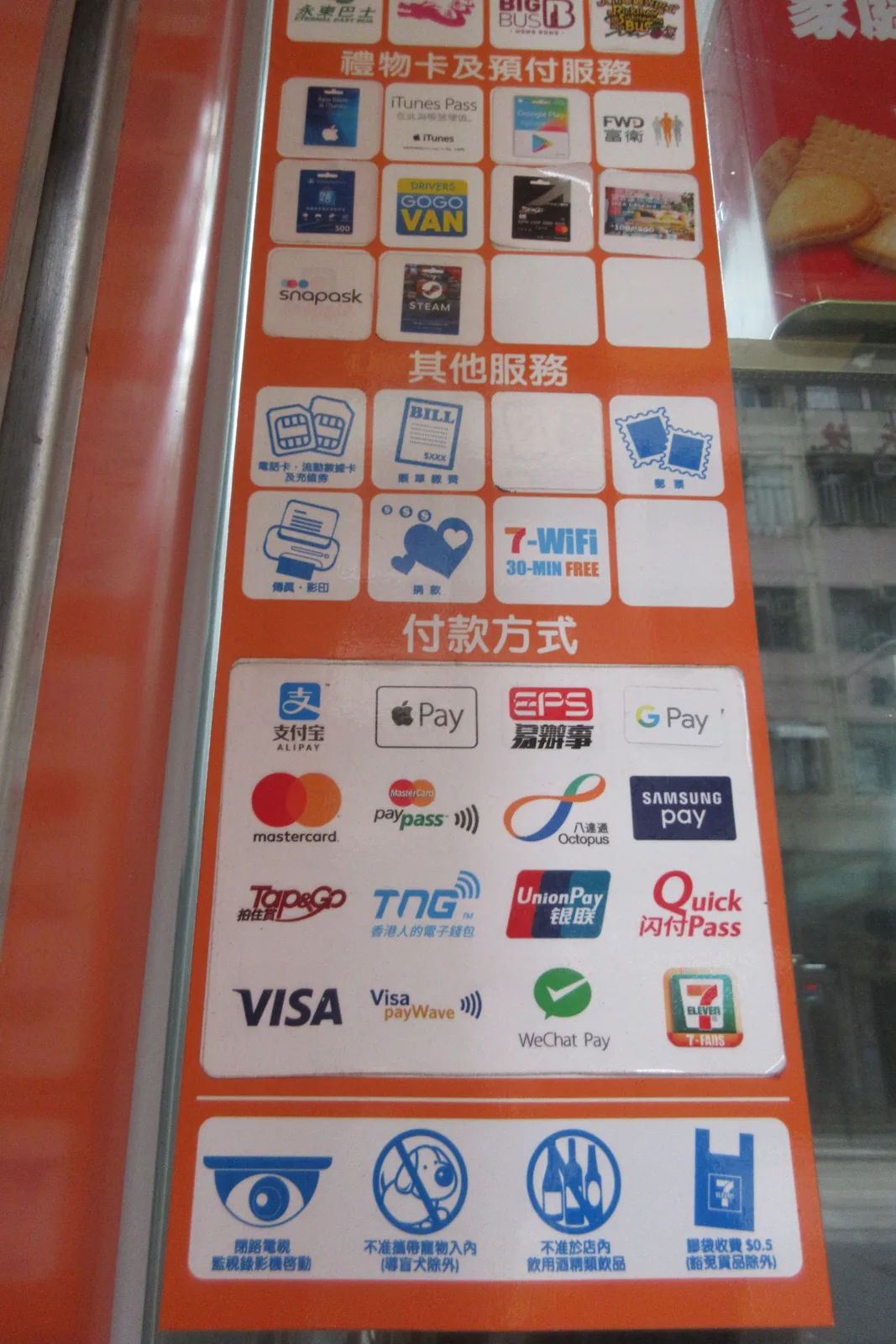
At an ATM, yes, and this is where foreign debit cards earn their place. Bank of China ATMs accept UnionPay, Visa, Mastercard, JCB and American Express, chip and magnetic stripe alike. ICBC, China Construction Bank and Agricultural Bank of China machines are similarly equipped in cities, and airport and major bank branch ATMs are the most reliable of the lot. Check the network logos on the machine against the ones on your card before you insert it.
Tell your bank you are traveling to China first. A first transaction in Shenzhen on a card that has never left North America is exactly the pattern fraud systems block.
As a payment card at a shop counter, a foreign Visa debit is in the same position as a foreign Visa credit card. The network is what matters, not the funding.
Withdrawal limits and ATM fees
Bank of China puts the single-transaction ceiling for foreign card withdrawals at CNY 3,000. Other banks set their own, often lower, around CNY 2,000 to 2,500. Your daily and annual limits come from your issuing bank, not from the Chinese machine, so the number to check is the one your own bank will tell you.
The machine fee usually runs CNY 20 to 30 per withdrawal, and your bank at home adds its own withdrawal fee and foreign exchange margin on top. Take out larger amounts less often. Four small withdrawals cost four fees.
Most Chinese ATM signage is in Chinese with an English option, and machines in tourist areas and shopping malls often add Spanish, French, Italian and German. Keypad layouts vary, some running zero to nine and some nine to zero, so look at the pad before you type. Three wrong PIN entries can get your card retained by the machine, which turns a five minute errand into a morning at a bank branch.
How much cash to carry
Carry some. Not a brick, but some.
Cash has quietly become a stronger fallback than it was. The Regulations on RMB Cash Acceptance and Services, issued by the People’s Bank of China with the National Development and Reform Commission and the National Financial Regulatory Administration, took effect on 1 February 2026. Businesses and public institutions may not refuse renminbi cash or attach discriminatory conditions to paying with it, and there are complaint channels when they try. Refusing your money is now a rule violation rather than a shrug.
Practically, a few hundred yuan in CNY 20 and CNY 50 notes covers the cases where the wallets fail you: a dead phone, a rural stall with no signal, a temple entrance, a driver whose QR reader will not scan. Break the big notes early. A CNY 100 note at a small vendor is an inconvenience for both of you, and taxis in particular rarely want to make change for one.
What foreigners should actually do
Set up Alipay and WeChat Pay with a verified passport and a linked card before you land. Bring a second card on a different network as a spare, ideally one with no foreign transaction fee. Withdraw cash once from a bank ATM on arrival rather than four times across the week. Pay in CNY every time you are asked. Keep the physical card for hotels and airports, where it works and where the amounts make the wallet’s 3% worth avoiding.
That is the honest version of what credit cards are accepted in China. The card in your pocket is fine. It just needs to travel through a QR code to be useful, and the sooner you set that up, the less of your trip you spend at cash machines. The rest of the practical ground, from visas to SIM cards, is covered across our guides for foreigners in China.
Quick answers.
What credit cards are accepted in China?
Can I use my Visa debit card in China?
How much can I withdraw at a Chinese ATM?
Does it cost anything to link a foreign card to Alipay or WeChat Pay?
Your dates. My quote.
Twelve hours.
Send your cities, dates and product list. You'll get a fixed written quote, no obligation, no deposit to ask.
superinterpreter · selina@mychinainterpreter.com · Xiamen, China · UTC+8